New York-based startup seeks to replace European dog supply with $1.2 billion valuation
A venture-backed firm aims to solve a critical defense logistics gap by cloning and genetically editing canines for the U.S. military and police.
By Valentina Cruz ·
The United States faces a significant logistical vulnerability in its defense and law enforcement sectors: a dwindling domestic supply of working dogs. Currently, more than 80% of the canines deployed by the U.S. military are imported from Europe, and fewer than half of these animals meet the fitness standards required for active service. This heavy reliance on foreign suppliers has prompted the emergence of Warhound, a company that exited stealth mode on Thursday with a $200 million funding round. The new valuation of $1.2 billion signals strong investor confidence in a venture-backed solution to a problem that has persisted for years.
The capital was raised from a roster of prominent investors, including Sequoia, 8VC, and Corner Ventures. Notably, In-Q-Tel, a venture capital firm backed by the CIA and other U.S. intelligence agencies, also participated in the round. This mix of traditional tech investors and government-aligned capital underscores the high stakes involved in securing a reliable, domestic source of specialized working animals for national security applications.
Warhound’s approach combines biological engineering with advanced technology. The company plans to use gene-editing techniques to develop dogs with traits specifically tailored for demanding missions, such as bomb detection and search operations. These tasks are often too dangerous for humans or too complex for current machine capabilities. By controlling the genetic makeup of the animals, the company aims to produce canines that are healthier, longer-lived, and more agile than their traditionally bred counterparts.
The business was founded by Ben Lamm of Colossal Biosciences and Palmer Luckey of Anduril Industries. Lamm and Luckey connected approximately a year ago at a conference, where Luckey raised concerns about the state of military working dogs. Lamm subsequently researched the industry and discovered that many traditional breeds, such as Belgian Malinois and German Shepherds, suffer from inherited health issues. These include poor eyesight, high cancer risks, hip dysplasia, and muscle atrophy, which frequently prevent dogs from completing training or serving effectively.
To address these biological limitations, Warhound is leveraging cell lines from top-performing breeds stored in a biobank. The team will edit these genes to enhance performance markers like speed, agility, and olfactory sensitivity. Colossal, known for its de-extinction work on species like the mammoth, provides the underlying technology through a licensing agreement and holds equity in the new venture. Luckey serves as a partner but does not hold equity in the company.
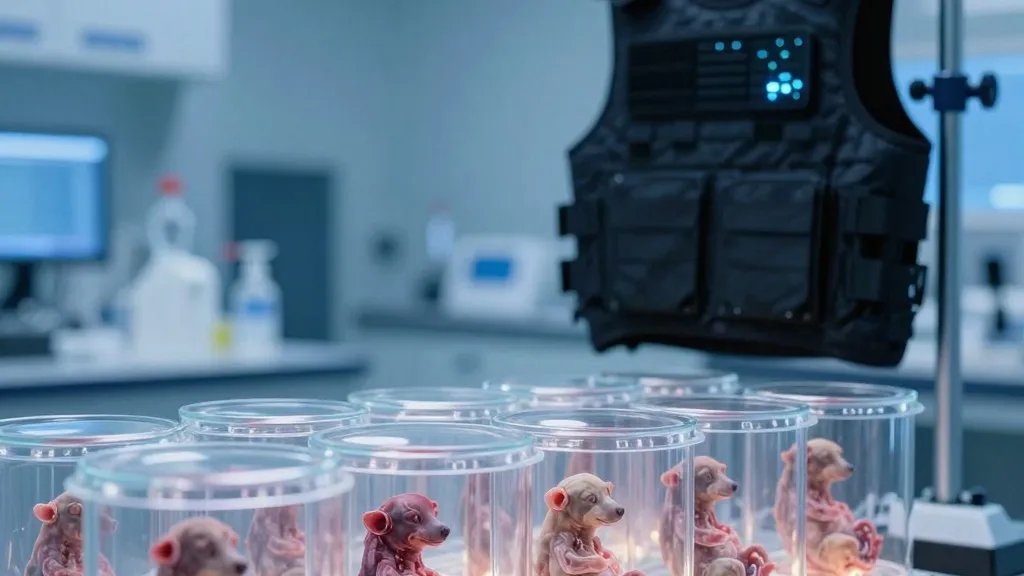
The operational side of the business is supported by Anduril, which will supply the hardware and software necessary for the dogs’ deployment. This includes protective gear such as vests and goggles equipped with data sensors. These devices will provide handlers with real-time situational awareness, effectively creating a digital layer of protection for the animals. Lamm described this integration as adding capabilities "on top of the dog, not in the dog," aiming to make the animals safer and more effective in the line of duty.
From a market perspective, Warhound has not yet established pricing for its canines. However, the company targets a broad customer base that includes the Department of Defense, various military service branches, police forces, and first responder units. Lamm indicated that the company has already briefed numerous government groups on its business model. The first batch of dogs is expected to be cloned and incubated soon, with births anticipated in early 2027 and potential service entry within two years. Viagen, another entity under the Colossal umbrella, will handle the cloning process, utilizing a technology with a high success rate.
To address public and institutional concerns regarding animal welfare, Warhound is collaborating with the American Humane Society. The organization is helping to certify the company’s training program and will likely serve as a retirement home for the dogs through its Military Working Dog Reunification Program. The American Humane Society stated that it applauds Warhound and Colossal for inviting the national humane organization to participate, emphasizing its commitment to ensuring the animals are treated humanely based on scientific and ethical standards.
The next phase for Warhound involves moving from development to production. With the first litters expected to arrive early next year, the company will begin the rigorous training process required for military service. As the U.S. seeks to reduce its dependence on European dog suppliers, Warhound’s ability to deliver a domestic, high-performance product could redefine the supply chain for working animals in the defense sector.
Source: TechCrunch